Introduction
In Senegal, many older—and even some newer—electrical installations lack proper grounding at every outlet. Yet that little green-and-yellow wire is far more than a detail: it's a critical safety feature for you and your family. At Domo-Smart Conseil, we believe that a smart home must first be a safe home. Let’s explore why grounding matters, and how to bring your installation up to modern standards.
Chapter 1: The Vital Role of Grounding – How It Works
What is grounding, exactly?
Put simply, it's a safety path that allows stray electrical current to be safely redirected into the earth.
The disaster you avoid:
Imagine an appliance like a washing machine or fridge develops an insulation fault.
- Without grounding: The metal casing becomes live. Touch it, and your body becomes the path to the ground—resulting in serious risk of electrocution.
- With grounding: The leakage current flows directly to the earth. A differential circuit breaker detects it instantly and shuts off the power.
Grounding doesn’t act alone—it enables protective devices to do their job.
Why it matters:
- Protects people from electric shock.
- Protects equipment from power surges.
- Ensures compliance with modern standards like NFC 15-100, widely used in West Africa.
Chapter 2: Is Your Installation Compliant?
A basic check: Open an outlet (after cutting the power!)—do you see a green/yellow wire connected to the earth pin?
Warning signs:
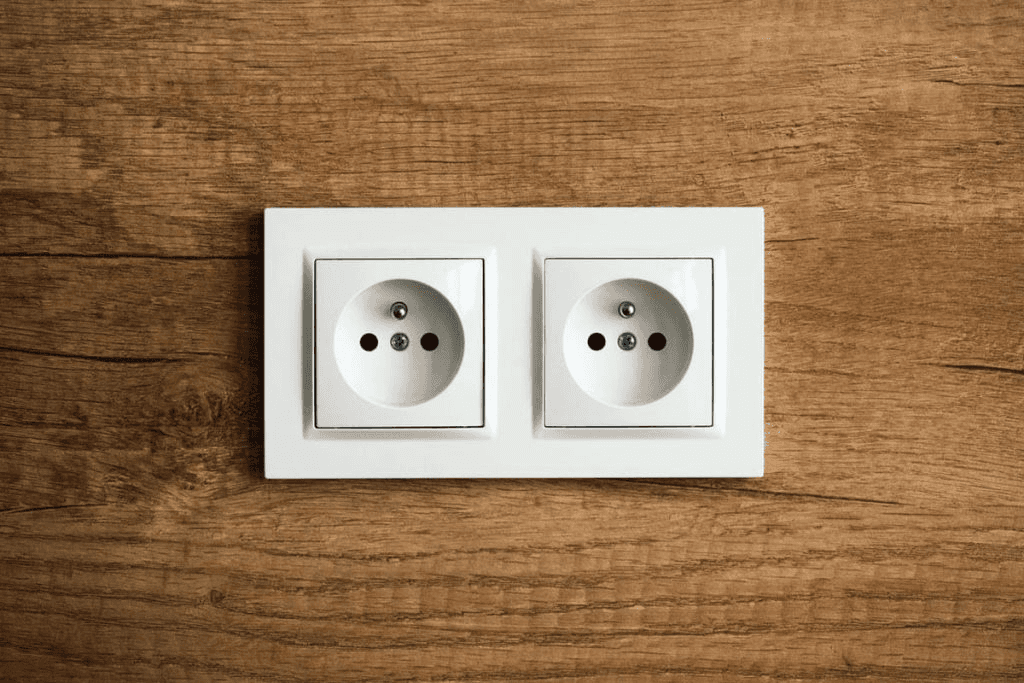
- 2-prong outlets with no ground pin.
- Old electrical panels with no 30mA differential breaker.
But seeing the wire isn’t enough.
The entire grounding system must be functional—meaning there’s a grounding rod with proper resistance. This should be measured by a qualified electrician.
Chapter 3: How Professionals Bring You Up to Code
Step 1: Installation Audit
A licensed electrician evaluates your current setup.
Step 2: Grounding Circuit Installation
This includes driving a proper earth rod and connecting it to your main panel.
Step 3: Outlet Replacement
Old outlets are swapped for 2P+E (2-pole + Earth) compliant models.
Step 4: Residual Current Protection
One or more 30mA differential circuit breakers are installed. These devices work hand-in-hand with grounding to protect you.
Chapter 4: What About Smart Home Devices?
Grounding is a prerequisite.
Sensitive smart devices (home automation hubs, connected modules) need electrical stability and clean power.
Enhanced security:
Smart outlets often include surge protection, but only work optimally with a properly grounded system.
Domo-Smart’s advice:
Never install smart systems on a faulty electrical base. Physical safety comes first. Compliance is the first step toward a truly “smart” home.
Conclusion
Grounding isn’t optional—it’s a foundational safety standard. If you're unsure about your home’s installation, don’t take risks. A professional audit is a small investment for lasting peace of mind.
Ready to make your home safe—and smart?
Reach out to Domo-Smart Conseil for a full electrical safety check.